LUGANVILLE, Espiritu Santo – The Malvatumauri National Council of Chiefs on 29 July officially launched its 50,000 Taro Project in Luganville, marking the commencement of a significant customary and agricultural initiative aimed at strengthening food security, promoting traditional crops, and encouraging community participation throughout Vanuatu.
The project originates from a resolution adopted by the Malvatumauri during the official opening of its new Nakamal in Port Vila in 2025. Through that resolution, the National Council of Chiefs mandated the Tabwemasana Council of Chiefs of Santo to spearhead the implementation of the project beginning this year.
The launch attracted chiefs, government officials, community leaders, farmers, church representatives, women and youth groups, and members of the public who gathered to witness the historic occasion.
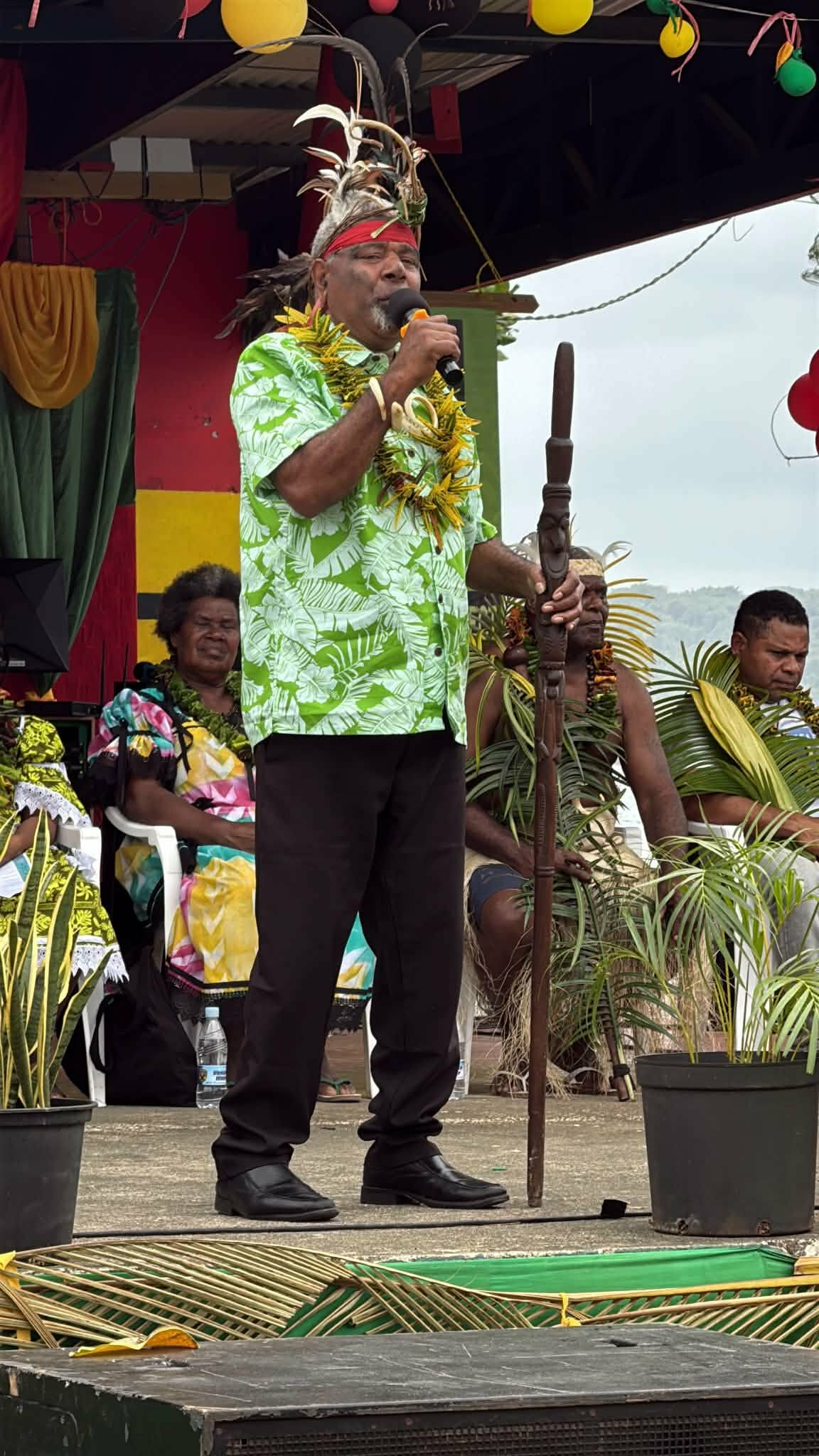
The ceremony featured two official addresses delivered by the President of the Malvatumauri National Council of Chiefs, Chief Paul Robert Ravun Merhimba Dangdang, and the Minister of Customs and Culture, Hon. Job Sam Andy.
In his keynote address, Chief Dangdang highlighted the importance of the project as a practical demonstration of customary leadership and collective responsibility in promoting food security and strengthening the nation's self-reliance.
He encouraged chiefs and communities throughout Vanuatu to actively support the planting and cultivation of taro, emphasizing that the traditional crop remains an important part of the country's culture, identity, and food systems.
Minister Job Sam Andy commended the Malvatumauri and the Tabwemasana Council of Chiefs for championing an initiative that supports both cultural preservation and sustainable agricultural development. He reaffirmed the Government's commitment to working alongside customary institutions to strengthen local food production and community resilience.
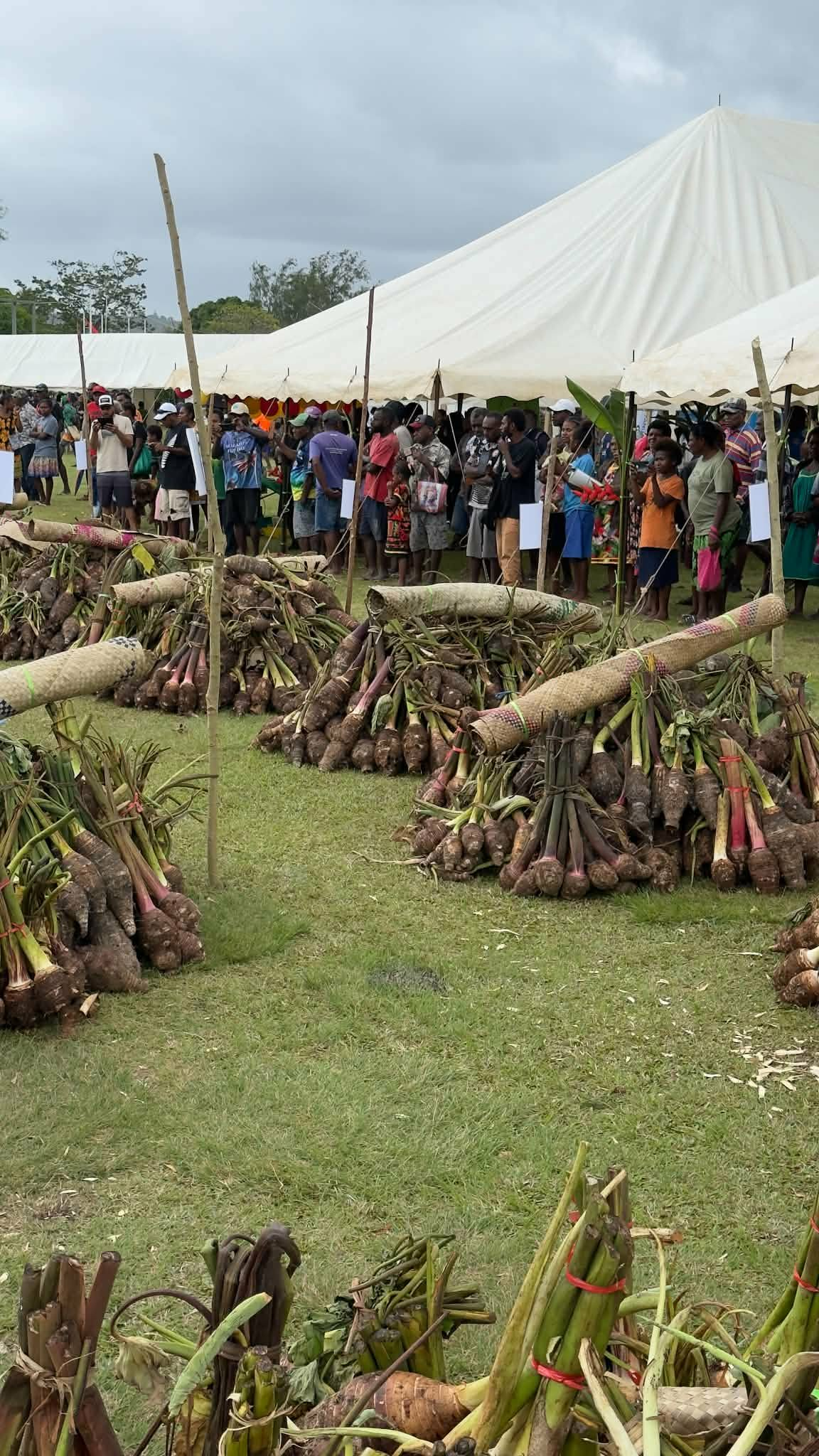
A key highlight of the launch was the presentation and distribution of taro harvested by chiefs and communities across Santo to officially commence the project. In the spirit of customary sharing and community solidarity, all harvested taro was distributed free of charge to public institutions, including schools, the Department of Correctional Services, the Vanuatu Police Force, hospitals, and other public institutions serving the people of Sanma Province.
The Malvatumauri stated that the values of sharing and caring for communities will remain central to the project. As annual harvests are gathered under the 50,000 Taro Project, chiefs will continue to play a leading role in ensuring that produce is shared fairly among communities and institutions according to customary principles and community needs.
The Council also emphasized that the project is first and foremost about ensuring food security for the people of Vanuatu.
"Before Vanuatu talks about exporting taro, we must first make sure there is enough taro on the ground to feed our own people."
The Malvatumauri stressed that the project will help build the country's resilience during natural disasters and emergencies by ensuring communities have access to healthy and locally-grown food.
"When disasters strike, Vanuatu should be able to feed its affected people with healthy, organic and nutritious food from our gardens rather than depending solely on imported food supplies. This project is about food security, self-reliance, and the wellbeing of our people."
The Council further confirmed that the successful implementation of the 50,000 Taro Project will require strong collaboration between customary and government institutions. The Malvatumauri has therefore committed to working closely with key government agencies, including the Department of Agriculture and Rural Development and the Department of Trade and Industry, to provide technical support, strengthen production, develop markets, and ensure the long-term sustainability of the initiative.
The Malvatumauri also acknowledged the leadership role of the Tabwemasana Council of Chiefs, which has been entrusted with coordinating and driving the implementation of the project as the first phase of what is expected to become a nationwide initiative.
The 50,000 Taro Project is expected to mobilise communities across Vanuatu to increase taro production while promoting customary values, sustainable agriculture, environmental stewardship, and national food resilience.
Today's launch marks the official beginning of the project's implementation, with planting activities and community engagement programmes expected to continue across Santo and expand to other provinces in the years ahead.