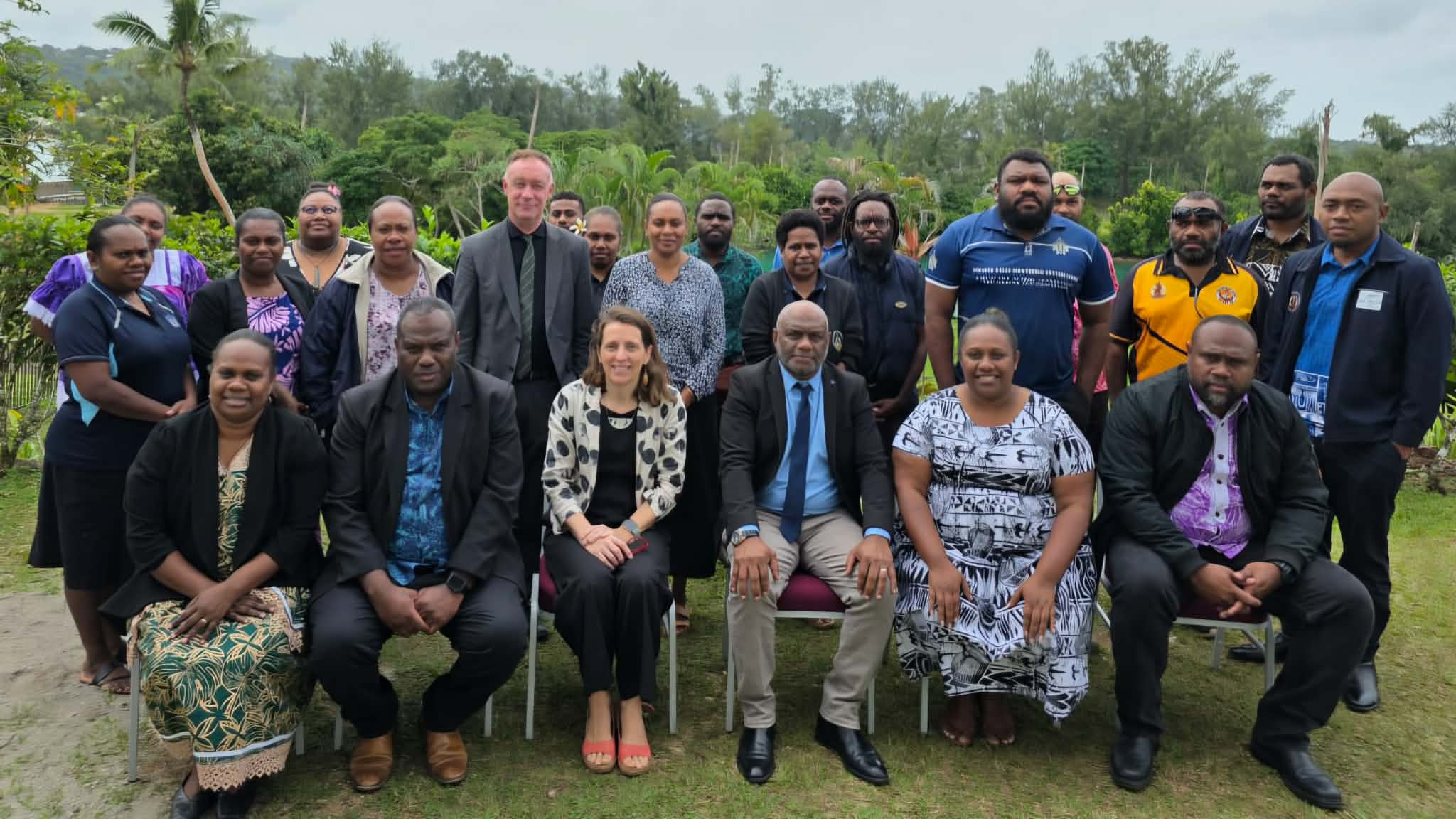
Port Vila, Vanuatu, 06-08-2026: The Government of the Republic of Vanuatu has taken a significant step forward in strengthening integrity, transparency, and accountability with the review of Draft Version 2.0 of the National Integrity and Anti-Corruption Policy (NIACP) 2026-2030 by the United Nations Convention against Corruption (UNCAC) Review Team during consultations held this week in Port Vila.
The review forms part of Vanuatu's ongoing engagement in the second cycle of the UNCAC review process, which focuses on corruption prevention measures and asset recovery. The review team examined the draft policy, provided technical feedback, and discussed opportunities to further align the proposed framework with international good practice and Vanuatu's commitments under UNCAC.
The NIACP 2026-2030 represents Vanuatu's first comprehensive whole-of-government and whole-of-society framework aimed at preventing, detecting, investigating, and addressing corruption while promoting a culture of integrity across public institutions and communities.
Minister of Youth, Justice and Community Services, Hon. Job Sam Andy, welcomed the review and reaffirmed the Government's commitment to strengthening good governance.
"The review of Draft Version 2.0 of the National Integrity and Anti-Corruption Policy by the UNCAC Review Team is an important milestone for Vanuatu. The Government is committed to ensuring that our integrity framework reflects international standards while responding to the unique realities of our country. This Policy is about building stronger institutions, protecting public resources, increasing public trust, and ensuring that integrity remains at the heart of national development."
The draft policy identifies key corruption risks facing Vanuatu, including political integrity challenges, procurement and public financial management weaknesses, financial crime vulnerabilities, and emerging risks associated with increasingly interconnected financial and digital systems. It also acknowledges the importance of customary governance structures, churches, civil society, the private sector, media, women, youth, and community leaders in promoting ethical conduct and accountability.
The Policy outlines seven strategic priorities, including leadership integrity, corruption prevention systems, ethical standards, enforcement and asset recovery, public education, multi-stakeholder partnerships, and strengthened monitoring and reporting mechanisms.
As part of the national validation process, Civil Society Organizations are meeting on Thursday to review and validate the draft policy, while government ministries, agencies, and institutions will undertake a similar validation exercise today. These consultations are designed to ensure that the policy reflects the perspectives and priorities of key stakeholders and reinforces a collaborative, whole-of-society approach to preventing corruption and promoting integrity.
The Government also welcomed the constructive engagement of government agencies, oversight institutions, civil society representatives, development partners, and other stakeholders who contributed to discussions during the review process.
Hon. Job Sam Andy noted that the policy will provide a practical roadmap for achieving Vanuatu's governance commitments under the National Sustainable Development Plan 2016-2030 and broader international obligations.
"Integrity and accountability are essential foundations for sustainable development. By working together across government and society, we can strengthen public confidence, improve service delivery, encourage investment, and ensure that public resources are used for the benefit of all ni-Vanuatu."
Following consideration of feedback from the UNCAC Review Team and outcomes from the national validation consultations, the revised policy will be finalised and submitted through the appropriate government processes for endorsement and implementation.