Responsibility Cannot Wait
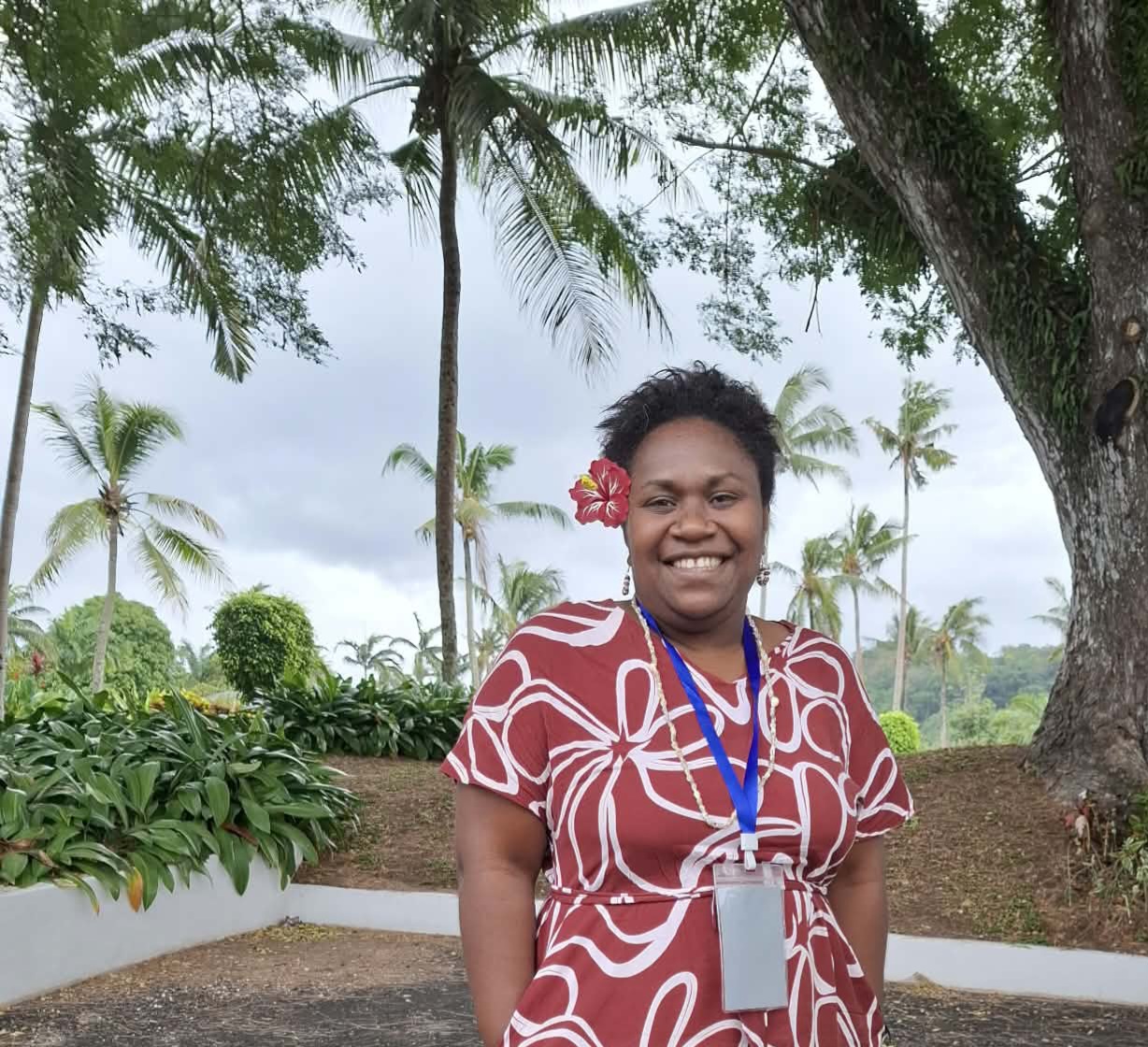
For Vepeta Timothy, protecting children is more than a professional responsibility. It is a commitment shaped by what she sees and hears in communities across Vanuatu.
As the National Child Safeguarding and Gender Equity Officer at the Ministry of Education and Training, Vepeta works to strengthen child safeguarding policies, improve reporting and referral pathways, and help create safer learning environments. She was drawn to the work because of a simple belief: “Every child has the right to be safe, protected and able to reach their full potential.”
But putting that principle into practice is not always straightforward. Part of Vepeta’s role is helping schools work out what to do when they become concerned about a child — particularly when the situation is complex, services are limited, or it is unclear who should take the next step.
Vepeta’s work often sits at the point where education and protection meet. A teacher may notice that a child’s behaviour has changed. A student may disclose violence at home or at school. A school may become aware of neglect, sexual abuse, harmful discipline, bullying or online harm. Sometimes the concern is clear. At other times, staff may only have fragments of information and need to decide what to do next.
Violence and harm also affect what happens in the classroom. Children cannot learn well when they do not feel safe. More than four in five children in Vanuatu experience violent discipline at home and 1 in 3 girls experience sexual abuse before they turn 15. Although Vanuatu has not yet measured the impact of this violence on learning, global evidence shows that violence can undermine children’s ability to concentrate, remember, participate and succeed at school.
A safe learning environment is also one where children are supported to participate positively in school life, follow agreed rules and treat others with respect. But responsibility for protecting children remains with adults. Teachers and schools are responsible for setting appropriate boundaries, responding to behaviour safely and fairly, and ensuring that every child’s dignity, safety and right to learn are protected.
Under the Ministry of Education and Training's National Safeguarding Policy, teachers and school staff play a critical role in recognising signs that a child may be at risk, responding appropriately to concerns, and following established reporting and referral procedures. Their role is not about investigating allegations, but about ensuring concerns are taken seriously and referred through the correct channels so children can access protection and support.
For schools, one of the challenges is knowing what should happen next. Staff may recognise that something is wrong, but still need clarity on who to contact, what information to record, how to support the child in the meantime, and where the responsibility of the school ends and that of the child protection system begins. For Vepeta, this can mean supporting schools through difficult situations while also navigating gaps in services, distance between islands and the involvement of several different agencies.
One case in particular has stayed with Vepeta. She recalls a child who experienced ongoing harm that went unidentified for some time.
“The situation highlighted how important it is for adults to recognise concerns, respond appropriately, and have clear reporting and referral pathways in place,” she says.
Cases like this also show why we cannot depend on a child being able to explain exactly what is happening. Younger children may not understand that what they are experiencing is wrong. Others may not have the words to describe it, may depend on the person causing the harm, or may fear what will happen if they tell someone. The responsibility for recognising and responding to harm therefore rests with the adults and institutions around the child.
For a child in danger, however, a response that comes too late can have lasting consequences.
Vepeta says a range of factors can make it difficult to ensure children receive timely protection and support. Limited resources, workforce and service capacity constraints, the geographical spread of Vanuatu’s islands, delays in reporting and gaps in knowledge about safeguarding procedures can all affect how quickly concerns are identified and addressed. In some cases, logistical barriers or the need for several agencies to coordinate can delay support. Social norms that normalise violence against children can also make it harder for concerns to be recognised or acted upon, while remoteness and the need for several agencies to coordinate can delay support.
Child protection, she stresses, cannot rest with one institution. Families, communities, schools, health services, police and social welfare agencies all have roles to play in recognising risks, responding to concerns and ensuring children receive the support they need.
When those systems are limited, “some children may not receive timely assistance, protection, or access to services,” she says. The consequences can affect not only their immediate safety, but also their wellbeing, education, development and future opportunities.
Vepeta believes the proposed Child Protection Bill offers an important opportunity to close some of these gaps. It would strengthen the legal framework for protecting children, clarify responsibilities, and help agencies work together when a child is at risk.
For the Ministry of Education and Training, this could make the pathway much clearer. If a teacher identifies a concern, the school would know what needs to be reported and to whom. A Child Protection Officer could then assess the child’s situation, determine what protection or support is required, and coordinate with the family and other services. Where there is an immediate safety concern or suspected offence, health services or police may also need to respond.
This matters because a school should not have to work out a child protection response on its own. Nor should a child or family have to move between agencies trying to find the right help. Clear responsibilities and referral pathways can help ensure that once a concern is raised, somebody is accountable for taking the next step.
“A stronger legislative framework would help ensure more consistent protection measures, clearer reporting obligations, and improved responses to children at risk,” she says. Families and communities remain central to children’s safety and wellbeing. In many cases, supporting the child also means understanding what is happening around the family and helping parents and caregivers access the assistance they need.
For Vepeta, passing the Bill is ultimately about creating a Vanuatu where children can grow up safe and supported.
Her hope is straightforward: “A Vanuatu where every child grows up in a safe, supportive, and nurturing environment, and where communities are empowered to recognise, prevent and respond to child protection concerns.”
Children experiencing harm should not carry the burden of protecting themselves. That responsibility rests with the adults, institutions and systems around them.
For Vepeta, this is why the proposed Child Protection Bill matters. By making responsibilities clearer and strengthening the links between schools, families, Child Protection Officers, and other services, it can help ensure that when a child needs protection, the system knows how to respond.