
Recent presidential pardons granted to men convicted of sexually abusing children have prompted reflection and discussion across Vanuatu about justice, accountability and what protection looks like in practice.
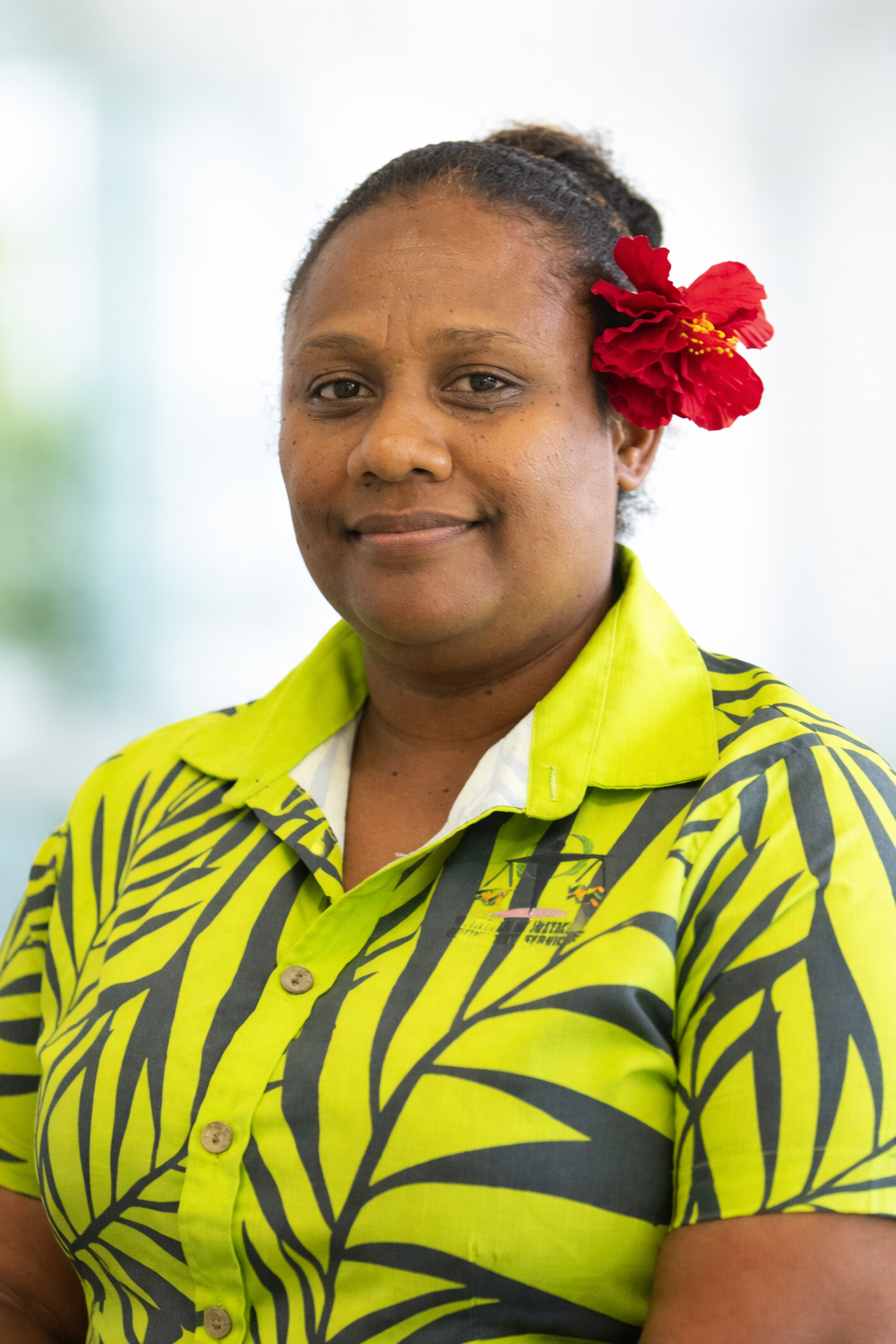
For Tristelle, Child Social Welfare Coordinator with the Ministry of Justice, Youth and Community Services, the conversation raises an important question about the experience of children navigating the systems designed to protect them.
"What does a child see when they look at the system?" she asks. "Because by the time a case reaches that point, a child has already gone through so much."
A child who experiences abuse often faces a long and difficult journey. There is the disclosure itself. Then comes telling their story again and again to different people, including family members, police officers, health workers and those involved in the court process. There are interviews, medical examinations, investigations and court proceedings. Each recounting can force a child to relive painful experiences. For many children and families, simply getting to that stage requires enormous courage.
"There was a reason why that person went to prison," says Tristelle. "Before that happened, there was a child who had to go through the process, there were services involved, there was evidence collected, there was a court process. A lot happened before that final decision."
From her perspective, the discussion is not only about one decision or one outcome. It is also about the messages children receive throughout the process and whether they feel confident that the adults and institutions around them will continue to stand beside them.
"The consequences for a child to sit through all of this and then see the person who harmed them released can be deeply traumatic. It can undo a sense of safety, reopen emotional wounds and leave children questioning whether the system will protect them."
Over the years, Tristelle has seen firsthand the realities facing children across the country. Cases referred through the child protection system include sexual abuse, neglect, physical abuse and emotional abuse.
"All the different types of abuse, we see them in Vanuatu," she says. "To say that these things don't happen here is not true."
Behind every case is a child whose life has been profoundly changed, often in ways that are not immediately visible to others.
One experience that has stayed with her involved a six-year-old girl in Class One who had been sexually abused. The girl's mother later described how her daughter had become consumed with trying to make herself feel clean again.
"She wanted to shower all the time," Tristelle recalls. "She didn't feel clean. Her mother spoke about how she constantly sought reassurance and comfort. She complained of physical pain and often revisited what had happened to her. What should have been a time of learning, playing and feeling safe became overshadowed by trauma. The effects were emotional, physical and social, impacting not only the child but also her family, including a mother trying to support her recovery on her own.
For a young child, safety, happiness and freedom should be what they experience growing up. Instead, she was carrying that trauma every day."
Stories like these are what continue to drive efforts to strengthen child protection systems in Vanuatu.
While significant progress has been made in recent years, challenges remain. One of the biggest is ensuring children can access support quickly, particularly in cases of sexual abuse where medical examinations and evidence collection are often time-sensitive.
"If a child is being told to come back tomorrow or come back another day, then we've missed something," says Tristelle. "It tells us there's a gap somewhere. These cases need to be prioritised."
She is quick to acknowledge the many people already working to protect children. Police officers, nurses, doctors, teachers, child protection officers, chiefs, church leaders and communities all play a role.
But despite the commitment of these frontline workers, responsibilities and referral pathways can still be unclear or fragmented. Children and families often find themselves navigating multiple services at what is already one of the most difficult moments in their lives.
This is why Tristelle sees the proposed Child Protection Bill as an important step forward.
"The bill doesn't take away the responsibility of parents," she explains. "It doesn't take away a mother's or father's role in caring for their child. It helps us protect children when abuse happens and strengthens the systems around them."
The legislation aims to provide clearer pathways for reporting concerns, assessing risk, coordinating responses between agencies and ensuring children receive the protection and support they need. At its heart, Tristelle says, it is about helping communities, families and services work together more effectively when children are at risk.
For her, child protection is about much more than responding after harm has occurred. It is about creating the conditions for children to grow up feeling safe, valued and able to reach their full potential.
"When a child feels safe and supported, they become resilient," she says. "They're confident. They perform well at school. They're able to speak up, make decisions and realise their potential."
The motivation to keep strengthening the system comes not only from the challenges, but also from what is at stake.
"That child could be the next Prime Minister. They could be the next teacher, lawyer or community leader," she says. "If we're not protecting them now, then what future are we creating?"
For Tristelle, child protection is not the responsibility of one ministry, one agency or one law. It is a shared commitment at every level, from families and communities to provinces and national institutions. It stretches from prevention and early intervention through to recovery, justice and accountability.
Every step matters.
Because when a child finds the courage to speak, they need to know the people and systems around them will listen, respond and follow through.