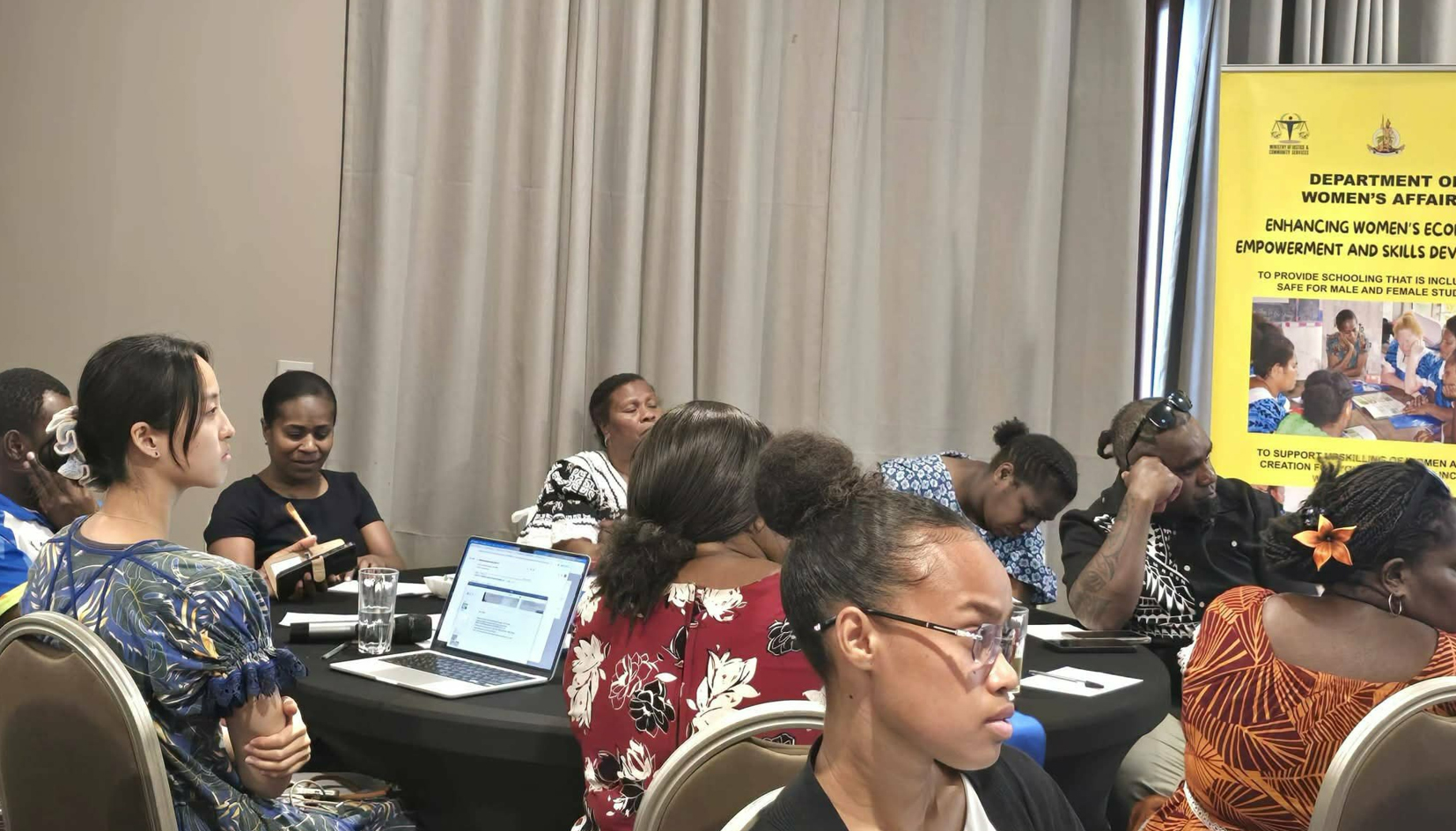
Port Vila, Vanuatu – On 29 October, the Department of Women’s Affairs within the Ministry of Youth, Justice and Community Services (MYJCS) convened a Mid-Term Review Validation Workshop for the National Gender Equality Policy (NGEP) 2020–2030 at the Ramada Resort in Port Vila.
The workshop brought together key government institutions, development partners and stakeholders to assess progress made under the National Gender Equality Policy and validate findings, gaps and recommendations across three priority strategic areas.
Participants reviewed achievements and challenges under Strategic Area 5, which focuses on fostering gender-responsive and community-driven solutions to climate change and disaster resilience. Discussions highlighted progress made since the policy's implementation while identifying areas requiring strengthened action over the remaining years of the policy.
The workshop also validated findings under Strategic Area 4, aimed at strengthening the foundations for gender mainstreaming across government institutions and national development programmes. Stakeholders examined progress reports and collectively identified priorities to further institutionalise gender-responsive planning and decision-making.
In the afternoon session, participants assessed Strategic Area 2, which focuses on enhancing women's economic empowerment and skills development. The review provided an opportunity to evaluate progress in promoting women's participation in economic activities and improving access to skills and livelihood opportunities.
A key objective of the workshop was to develop implementation plans for the period 2026–2030, identifying priority activities, lead agencies, supporting partners and timelines for action. The validated findings will contribute to the NGEP Mid-Term Review Report and guide future interventions to advance gender equality and women's empowerment in Vanuatu.
Speaking during the workshop, officials emphasised the importance of evidence-based reviews to ensure the policy remains responsive to national priorities and emerging challenges, including climate change, economic recovery and inclusive development.
The workshop concluded with a summary of validated findings and agreement on next steps to strengthen implementation efforts over the remaining years of the National Gender Equality Policy 2020–2030.