News

    Latest news

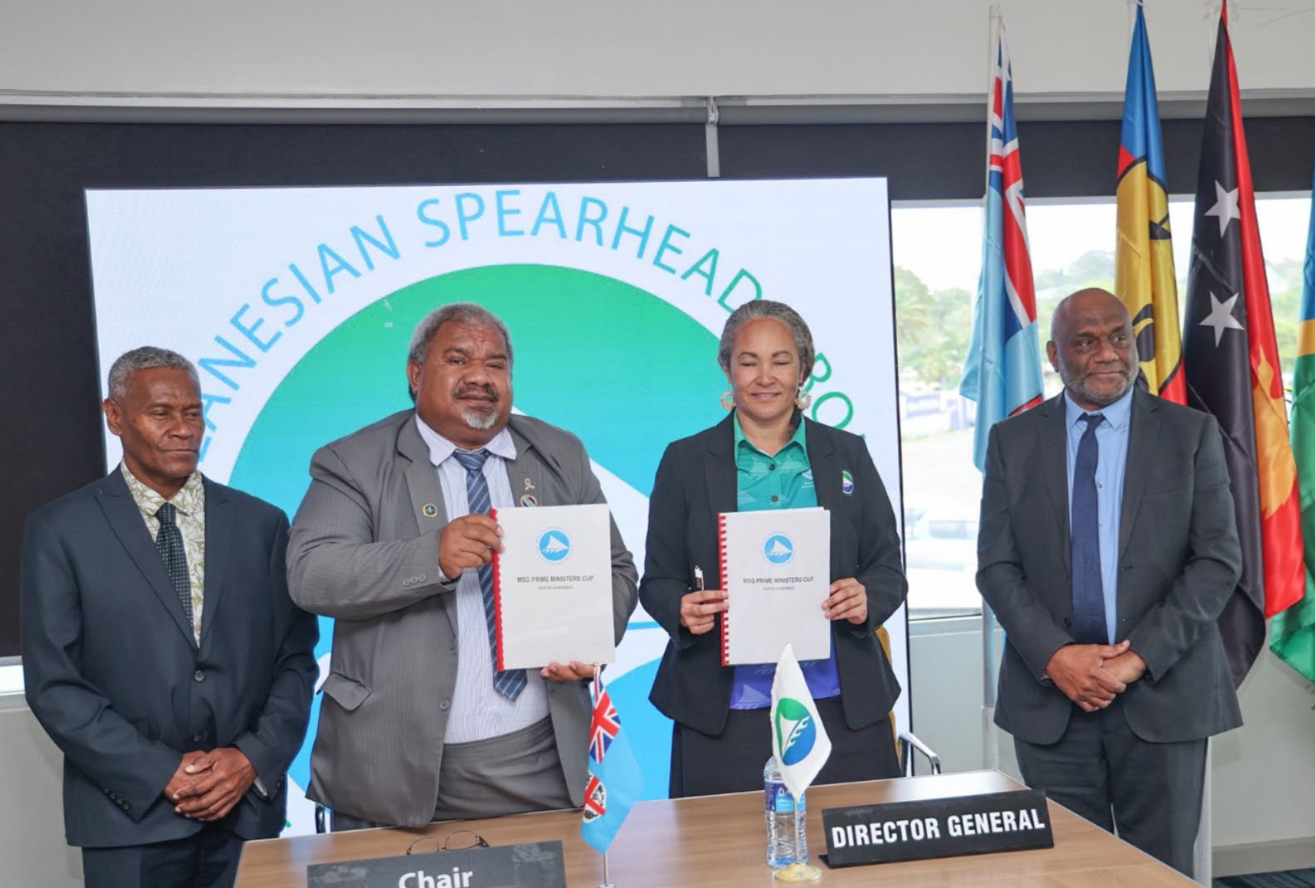
    Director General Calls for Greater Public Engagement and Visibility of MYJCS Services

    The Director General of the Ministry of Youth, Justice and Community Services (MYJCS), Ms Cherol Alana Ala, has emphasized the need for increased public visibility and engagement across all agencies under the ministry.

    Strengthening Everyday Essentials Through Human Rights in the Pacific

    Last Wednesday, 10 December 2025, marked Human Rights Day, commemorating the adoption of the Universal Declaration of Human Rights (UDHR) in 1948. Born from the devastation of World War II, the UDHR set out a global framework to protect dignity, prevent atrocities, and enable people and communities to thrive. Human rights are not abstract ideals – they belong to all of us. When people understand and claim their rights, and when States meet their obligations, societies are stronger, fairer, and more resilient.

    The theme for Human Rights Day 2025, “Our Everyday Essentials,” reminds us that human rights shape daily life. Raising families in safety, accessing education and healthcare, practicing faith, earning a living, protecting land and oceans, and enjoying clean water and nutritious food are all possible because human rights are realized in practice. When people are empowered to claim their rights, human rights become a living force that strengthens social cohesion and enables everyone to fulfil their potential.

    While there is much to celebrate, significant challenges remain in advancing human rights in the Pacific, particularly for women and girls, persons with disabilities, and Pacific Islanders of diverse sexual orientation, gender identity, gender expression and sex characteristics. Globally, we are witnessing troubling backsliding on human rights, inclusion, equity, and good governance. The Pacific is not immune, especially amid climate impacts, inequality, demographic change, and rising pressure on public institutions. These challenges underline why human rights matter: they provide a blueprint for fairness, accountability, and dignity. Discrimination and exclusion weaken societies; inclusion strengthens them.

    Encouragingly, the Pacific continues to demonstrate how human rights can flourish when grounded in local realities, Indigenous knowledge, and Pacific values of collective wellbeing, mutual care, and respect for the environment.

    One example is Pacific leadership in making the international human rights system more accessible. In 2020 and again in April 2025, UN human rights treaty bodies visited Apia and Suva, supported by the Pacific Community (SPC). Hundreds of government officials, civil society representatives, faith leaders, and community members engaged directly with these bodies in the region. These visits deepened public awareness, empowered Pacific voices, and ensured that UN guidance better reflected Pacific realities.

    A second example is Pacific leadership in securing the International Court of Justice advisory opinion on climate change. Initiated by University of the South Pacific students and advanced by Vanuatu and other Pacific governments, the campaign united Pacific countries and regional organizations. The ICJ affirmed that States have legally binding obligations, including under human rights law, to protect the climate system for present and future generations. This was human rights in action – driven by youth, informed by lived experience, and grounded in Pacific solidarity.

    A third example is the recognition of Indigenous and traditional knowledge as a foundation for human rights and sustainable development. Traditional land and marine management systems across the Pacific, alongside initiatives such as Fiji’s Vanua Diploma program, demonstrate how human rights gain strength when aligned with culture, identity, and community responsibility.

    Together with the Boe Declaration and the Pacific Forum Leaders’ 2025 Ocean of Peace Declaration, these examples show that the Pacific is not merely engaging with the global human rights system – it is shaping it.

    As we mark Human Rights Day 2025, we are reminded that human rights were forged in crisis to offer hope, dignity, and unity. Their full power in the Pacific will be realised when they are understood, embraced, and claimed by everyday people. In doing so, human rights can help deliver the Pacific Islands Forum Leaders’ vision of a resilient, inclusive, peaceful, and prosperous Pacific where all people can live free, healthy, and productive lives.

    Community Parole Board Members Inducted for Shefa Province

    The Department of Correctional Services has successfully completed a one-day induction training for the newly appointed Community Parole Board Members for Shefa Province. The training, held on 3 December 2025 at the Vanuatu Law Reform Commission’s Conference Room, also included the two re-appointed permanent Board Members, who attended as part of a refresher program.

    Facilitated by Mr. Daniel Tavoa the Manager of Probation Services, the induction covered key areas of the Board’s responsibilities, including the Correctional Services Act No. 10 of 2006 and its amendments, Rod Blong Jastis, the operational manual, Board processes, decision-making procedures, and reporting requirements. The training aimed to equip members with the knowledge and skills needed to carry out their duties effectively.

    Those who completed the one-day induction were the two permanent members, Charleon Falau and Janet Kaltovei, along with the two newly appointed alternate members, Ps. John Leeman and Lorina Liwuslili.

    The session concluded with certificates presented by the Director of Correctional Services, Mr. Johnny Marango.

    Preparations are now underway to induct three new Community Parole Board Members in Sanma and Tafea Provinces in early 2026.

    Daleroau Disability Association Commemorates Disability Day

    A wave of excitement swept through Piliura Village on 3 December as the Nguna/Pele (NAPE) Area Council led a heartfelt celebration of Disability Day. The event drew people from all walks of life, united by a shared goal recognizing and uplifting persons with disabilities.

    The Daleroau Disability Association took centre stage, with its members and their families gathering in a joyful and inspiring show of community spirit.

    Tristelle Karae of the Ministry of Youth, Justice and Community Services reaffirmed the government’s commitment, alongside its partners, to supporting and advocating for the rights and needs of persons with disabilities.

    Stakeholders, including several non-governmental organizations, were acknowledged for their ongoing efforts in implementing government policies aimed at assisting people living with various impairments. Participants were also informed that the government intends to review its disability policy in the coming year and begin drafting a new Disability Law that will reflect the perspectives and experiences of community members.

    Shefa Provincial Government Councillor Jeffrey Kenneth emphasized the importance of the government’s decentralization policy and recognized the support provided to staff from the Vanuatu Ministry of Justice and Community Services. He described the establishment of the new Shefa Disability Committee as a significant step forward that will strengthen coordination between area council committees and authorities at the provincial and national levels.

    Mr. Charley Liu of the Daleroau Disability Association noted that substantial work remains to effectively address the needs of persons with disabilities at the community level. He encouraged community members to adopt more inclusive attitudes and offer greater care and support.

    The Daleroau Disability Association currently has 36 registered members 13 women and 23 men. The celebration concluded with skit performances and the ceremonial handing over of a stick fire to the next host village. Utanlang Village on Nguna Island is set to host the Disability Day celebrations in 2026.

    The Shefa Disability Desk extended its appreciation to the chief and the people of Piliura Village for their warm hospitality, Ministry of Youth, Justice and Community Services, Vanuatu Skills Partnership, Action Aid, and all individuals whose support helped make the celebration memorable.

    Office of the Public Solicitor (OPS) aligns on ambitious reform program

    PORT VILA, DECEMBER 1: The Office of the Public Solicitor (OPS) unanimously endorsed an ambitious reform program at its 2025 Annual Planning Conference. Marking an important milestone in the Office’s long-term efforts to strengthen legal aid services across Vanuatu, lawyers from across the country concluded detailed consideration of the Consultative and Policy Paper for the proposed Public Solicitor Act 2026.

    The OPS plays a vital role in defending human rights, providing legal advice and representation in criminal, civil and family law cases, and supporting vulnerable groups including women, children and marginalised communities. Operating permanent offices in Port Vila, Santo, Tanna and Malekula, with circuit work to other islands, the OPS works to ensure that people across Vanuatu can access timely and fair legal support. The Office continues to face significant pressures, including rising case numbers, increasing legal complexity, and a current backlog of more than 600 active files.

    This year’s conference in Port Vila was the first convened by Acting Public Solicitor, Ms Jane Tari, and the most significant OPS conference in many years. Across 34 hours of discussion and analysis, staff approved the Consultative and Policy Paper that forms the foundation for the proposed Public Solicitor Act 2026, alongside major organisational plans including the new Staff Manual, new Finance Regulations and the 2026 Business Plan.

    “Our mission at the Office is to serve as many people as we can across the country. To deliver on that goal we need to reform our internal processes and reimagine our role within the justice

    system,” said Ms Tari. “The existing Public Solicitor Act is more than 40 years old and no longer reflects the demands placed on the OPS under our constitutional mandate. Despite the dedication of our lawyers across the country, we recognise that changes are required. The Office is significantly understaffed, under-resourced, and facing rapidly increasing caseloads. The conference provided a unique opportunity to consider our policy reforms and the role the Office can play to strengthen the justice system into the future.”

    Key gaps in the current legislation affect governance, service delivery, and the ability of the office to meet its constitutional responsibilities. These include the absence of a modern statutory framework for legal aid, limited powers for the Public Solicitor to delegate or appoint deputies, no mechanisms for cost recovery, and no statutory protections for independence or adequate resourcing.

    OPS staff contributions have helped shape the next phase of the OPS Reform Program, including preparations for the 2026 Supplementary Budget and the legislative process for the new Act. Representatives of the Vanuatu Law Reform Commission (VLRC) attended the conference as part of their formal consultation process, marking a significant step forward in legislative preparation.

    Please publish modules in offcanvas position.

    ⚠️ Beware of fake websites pretending to be official. Always check the domain carefully as official Vanuatu Government sites end with .gov.vu.